
The Most Watched Exam in China Isn’t the Test Paper — It’s the System Built Around 12.9 Million Students
By: Adrian Cole – SeaPRwire – A nation does not mobilize this level of coordination for an ordinary examination. On June 7, China’s 2026 National College Entrance Examination, better known as the Gaokao, begins with 12.9 million students entering examination halls across the country. The headline number attracts attention. The more revealing story sits outside the classroom. What stands out is the scale of public administration required to ensure that millions of young people can arrive, sit down, and take the same test under largely equal conditions.
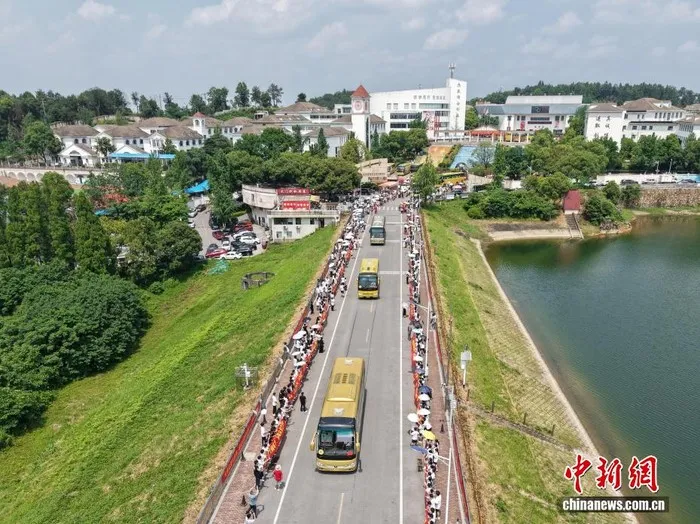
The official measures reveal how extensive that effort has become. Cities across China activated noise-control programs around examination sites. Public transport operators were instructed to reduce disturbances. Construction work and other noise-producing activities near testing centers faced restrictions. Beijing continued its “green channel” services through the subway system, while ride-hailing platforms prioritized examination-related trips. Police departments opened expedited identification services, and market regulators issued compliance requirements to discourage unreasonable hotel pricing. In Hebei, traffic authorities launched a special “Safe Gaokao” campaign. In Chengdu, health officials introduced a 15-day psychological support program offering emotional counseling, sleep guidance, and crisis intervention services for students, parents, and teachers.
The second layer of the story concerns fairness. This year, the Ministry of Education called for stronger action against cheating and placed particular attention on emerging technologies. Local governments upgraded intelligent security inspection systems capable of detecting mobile phones, smart glasses, and other prohibited devices. Shandong implemented full-process examination paper tracking, including Beidou positioning systems, police escorts, video recording, and around-the-clock monitoring. Guangdong authorities coordinated with education, cybersecurity, telecommunications, and market regulators to crack down on the online sale of cheating equipment and organized examination fraud. Inner Mongolia continued using a “2+1” security inspection model supported by human invigilators, video surveillance, mobile patrols, and real-time intelligent monitoring. The message is straightforward. As technology evolves, examination security must evolve faster.
The weather may become the final variable. According to forecasts cited by authorities, strong rainfall is expected across parts of southern and eastern China between June 6 and June 9, bringing heavy rain, thunderstorms, strong winds, and localized severe weather. Students and families are being urged to monitor transport conditions and allow additional travel time. In many countries, standardized testing is viewed as a school event. In China, the Gaokao increasingly resembles a nationwide governance exercise involving transportation systems, law enforcement agencies, public health services, weather monitoring networks, and digital security infrastructure. The practical lesson is simple: when 12.9 million students are involved, fairness depends not only on what happens inside the examination room but also on everything that happens outside it.
Author bio: Adrian Cole, a scholar focused on public administration and social policy, specializing in how large-scale institutions coordinate services, regulation, and citizen outcomes in modern societies.